LTS Teams Awarded at the Luxembourg CanSat Competition
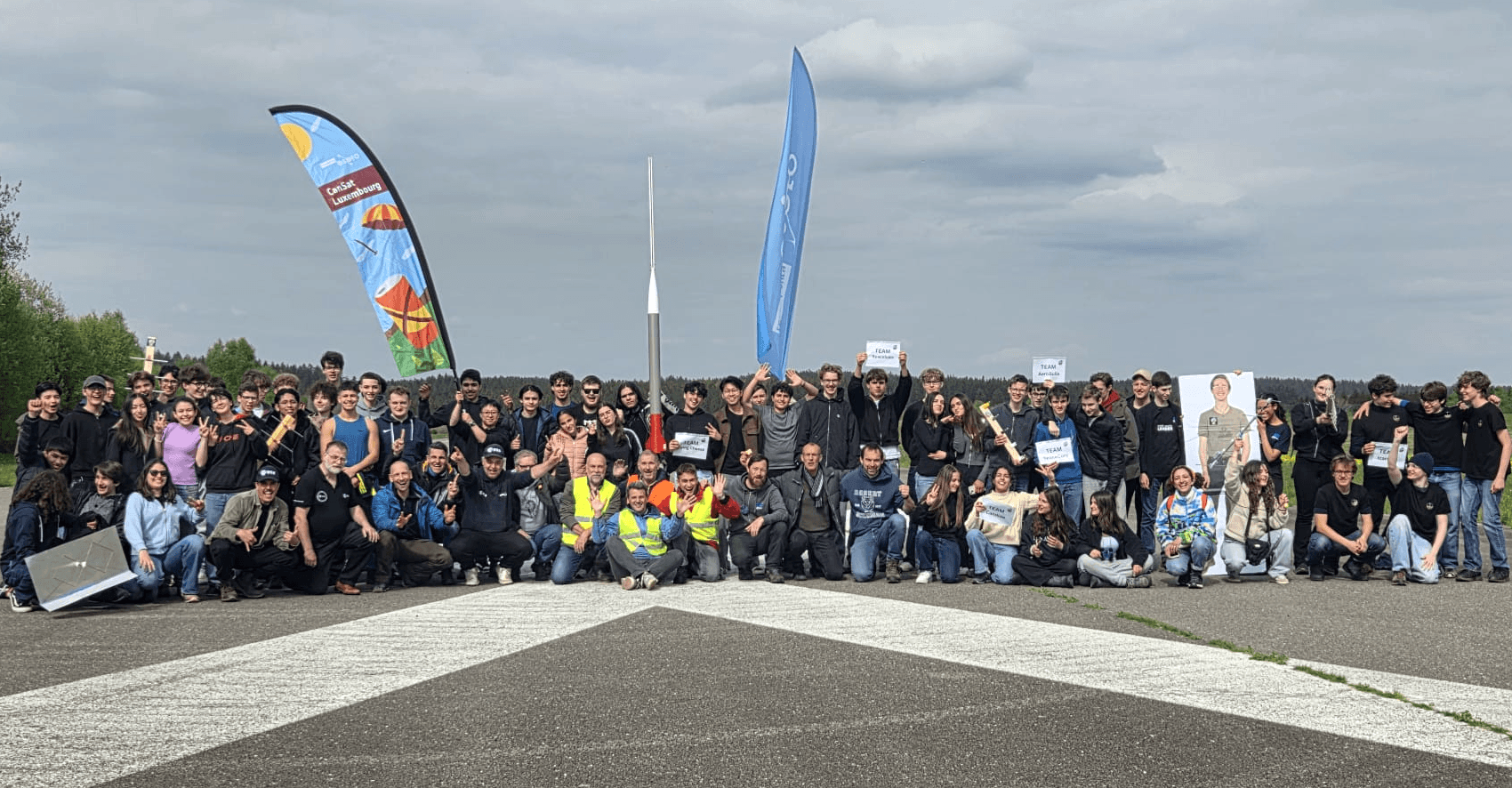
A CanSat is a satellite that fits inside a soda can. It’s at the centre of a competition initiated by the European Space Agency, in which high-school students build the satellite themselves and launch it by rocket.
Mission planning, electronics integration, testing, setting up communication systems, data analysis, documentation. All of these are exactly what engineers face in real aerospace projects, and so do students aged 14 to 19 years old participating in the CanSat Competition. The satellites they build and deploy contain a microprocessor, sensors, power source, and parachute. On launch day, rockets carry the mini-satellites up to approximately 1 kilometre.
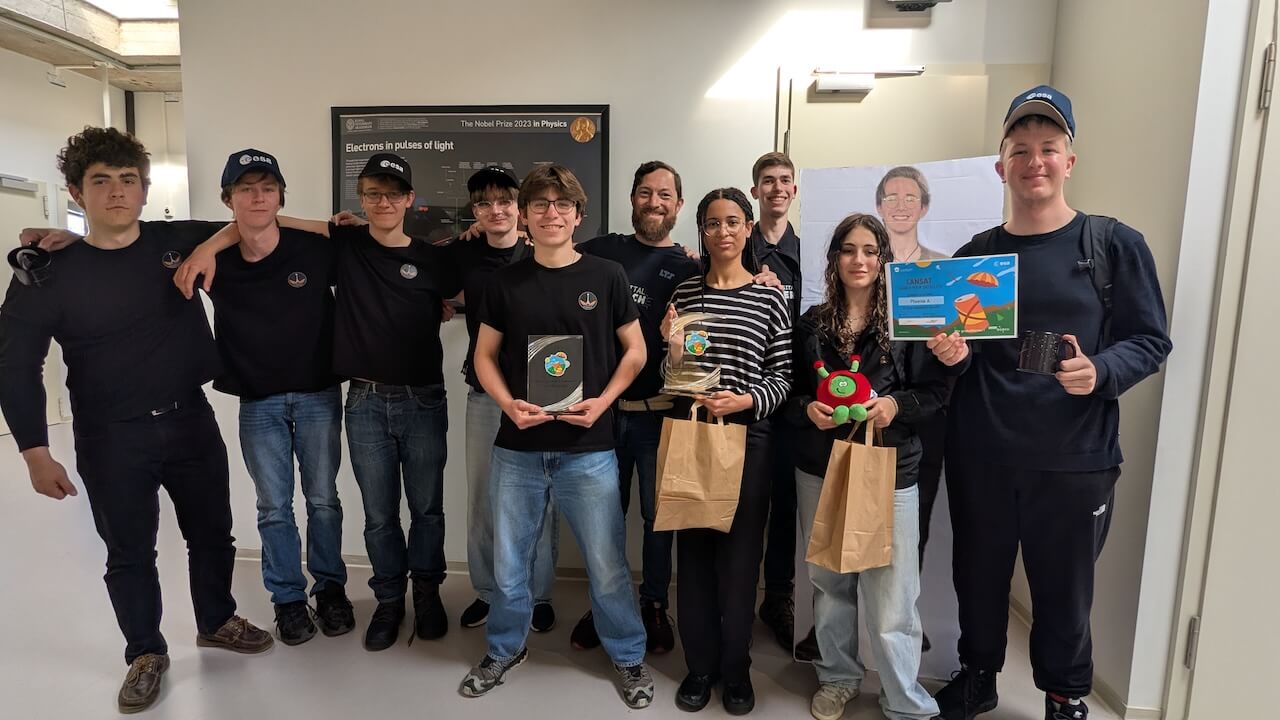
Icarus-6 and Phoenix-A were the teams guided by LTS Coach Sebastian Barillaro at this year’s edition. Icarus-6 won the Highest Technical Achievement Award, meaning that their CanSat had an exceptional engineering design and it smoothly deployed sensors and atmospheric sampling mechanisms. Team Phoenix A was awarded the Best Outreach prize for their community engagement and project communication.
Some of the students in these two teams already had their first encounter with real aerospace engineering in 2025, when they launched a weather balloon into the stratosphere. CanSat gave them another chance to take that curiosity for space tech further, and once again they saw their work taking off.